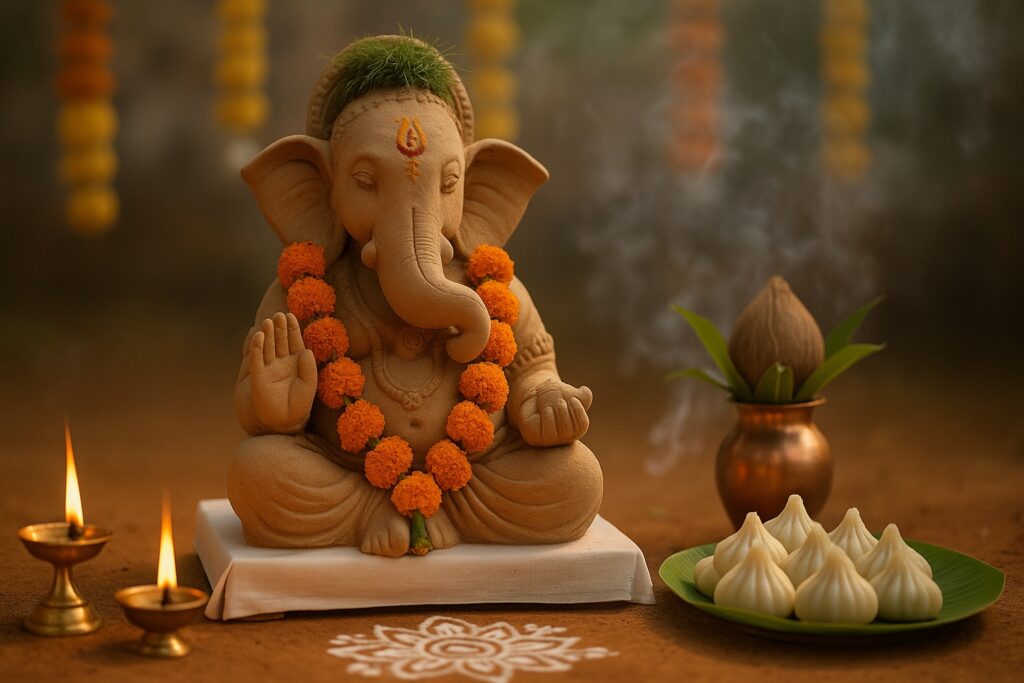
Vinayaka Chavithi: Wisdom, Unity & Eco-Conscious Devotion
A complete guide—Story • Pooja • History • Science • Conclusion
1) The Birth of Ganesha — A Purāṇic Story, Told Simply
On Kailāsa, Goddess Pārvatī wished for privacy as she prepared for a bath. From the fragrant paste (or clay) she’d applied, she shaped a child—loving, sturdy, and loyal—and breathed life into him. She asked him to guard her door. When Śiva arrived, the boy—unaware of who stood before him—refused entry. A clash ensued; in the storm of destiny, the child was beheaded. When Pārvatī’s grief shook the worlds, Śiva vowed to restore the boy—sending his gaṇas to bring the head of the first creature facing north. They returned with the head of a gentle elephant. Joined to the boy’s body, sanctified by divine grace, arose Gaṇeśa—lord of beginnings and remover of obstacles. The Purāṇas preserve many versions, but this is the most beloved. :contentReference[oaicite:0]{index=0}
Symbolically, the story teaches obedience, compassion, and transformation: stubborn pride (the severed head) is replaced by wise strength (the elephant’s head), making Gaṇeśa the guardian at the threshold of every auspicious work. :contentReference[oaicite:1]{index=1}
2) How to Celebrate at Home — A Simple, Respectful Pooja
Materials
- Clay idol (śāḍu māṭī) or reusable metal idol; a clean wooden/stool platform with cloth
- Turmeric, kumkum, sandal paste, flowers (especially marigold), durvā grass
- Fruits, coconut, modak/laddus (traditionally 21 modaks), incense, lamp
- Clean water in a small kalash; optional: betel leaves/nuts, cardamom, camphor
Step-by-step
- Altar & Sthāpana: Purify the space, spread a clean cloth, place the idol, and apply turmeric/kumkum/sandal.
- Sankalpa: Silently state your intent—seeking wisdom, removal of obstacles, and community well-being.
- Prāṇa-pratiṣṭhā (simple form): With folded hands, invite Gaṇeśa to abide in the idol and your heart.
- Upacāras: Offer water, flowers, durvā grass, incense, lamp, and naivedya—especially modak, Gaṇeśa’s favorite sweet.
- Mantra & Ārati: Chant “Om Gaṁ Gaṇapataye Namaḥ” or sing a familiar ārati; share blessed prasāda.
- Visarjan (home-friendly): After 1½, 3, 5, 7, or 11 days, respectfully immerse a clay idol in a bucket/tub at home; use the water for plants. (Municipalities often provide clay-idol tanks or eco-tanks.) :contentReference[oaicite:2]{index=2}
Note: Customs vary by region and family tradition; the above is a simple, inclusive format anchored in core observances. :contentReference[oaicite:3]{index=3}
3) Historical References — From Ancient Kings to Freedom Struggle
a) Early Artistic & Royal Patronage
Ganesha appears in early Deccan art: for instance, a well-known image stands in Badami Cave 1 (6th century CE), from the Chalukya era—evidence of established Gaṇeśa worship in royal temple complexes. :contentReference[oaicite:4]{index=4}
b) Maratha Era & Peshwa Devotion
Historical accounts describe strong devotion to Gaṇapati among the Peshwas in 18th-century Pune, with Shaniwar Wada witnessing grand celebrations and household/public worship—an important precursor to later mass festivities. :contentReference[oaicite:5]{index=5}
c) Lokmanya Tilak & the Independence Movement
In 1893, Lokmanya Bal Gangadhar Tilak transformed largely private observances into sarvajanik (public) celebrations—using Ganesh Utsav to build unity across castes and classes and to nurture nationalist consciousness under colonial rule. :contentReference[oaicite:6]{index=6}
4) The Science & Sustainability Behind Vinayaka Chavithi
a) Seasonal Foods, Sensible Nutrition
The festival arrives near the end of monsoon; steamed modaks—with rice flour, coconut, and jaggery—offer energy without deep-frying, and are traditionally offered as Gaṇeśa’s favorite. (Enjoy mindfully if you’re watching sugar.) :contentReference[oaicite:7]{index=7}
b) Eco-Friendly Idols & Clean Water
Plaster-of-Paris (PoP) idols and chemical paints can release harmful materials into water during immersion. Clay idols decorated with natural dyes dissolve safely and are now widely encouraged by civic bodies. :contentReference[oaicite:8]{index=8}
Municipal initiatives increasingly promote clay idols and home/tank immersions to protect lakes and rivers—e.g., free clay-idol distribution in Hyderabad and measurable shifts towards eco-friendly idols in Mumbai. :contentReference[oaicite:9]{index=9}
Tip for home visarjan: dissolve clay idols in a tub and neutralize residues; several cities have even suggested mild sodium-bicarbonate use for cleaner disposal in past drives. :contentReference[oaicite:10]{index=10}
5) Conclusion — Where Devotion Meets Good Sense
Vinayaka Chavithi is a doorway: before we begin anything new, we pause, seek clarity, and ask the remover of obstacles to steady our steps. The Purāṇic story reminds us to transform pride into wisdom; the history reminds us that shared celebration can knit society together; the science reminds us that love for the divine must include care for our rivers, air, and soil. Worship with sincerity, share prasāda with joy, and choose practices that leave your community and environment better than you found them—this is both devotion and dharma.
 English
  Hindi
Hindi